
Category: Resources
How to Choose a Custom Jewelry Manufacturer in 2026
How to Choose a Custom Jewelry Manufacturer in 2026: 7 Questions Smart Brands Ask First
![[HERO] How to Choose a Custom Jewelry Manufacturer in 2026: 7 Questions Smart Brands Ask First](https://cdn.marblism.com/mTORcGXWmtv.webp)
Dear Reader,
First off, congrats. If you’re reading this, it means you’re either ready to take your jewelry brand to the next level or you’re tired of the "trial and error" phase that leaves your desk cluttered with sub-par samples. We know the feeling. Launching a brand is a remarkable journey, but the jump from a handful of handmade pieces to a full-scale production run is where things get real.
In 2026, the jewelry market moves faster than ever. Trends pop up on social media and disappear in a week, and customers expect luxury quality even at accessible price points. Choosing a custom jewelry manufacturer isn't just about finding someone who can pour metal into a mold; it’s about finding a partner who acts as an extension of your own team.
So, how do you separate the world-class partners from the middle-men with a fancy website? Well, you ask the right questions. Here is the framework we use at Atila to help our partners succeed.
1. CAN YOU HANDLE MY SCALE (FROM PROTOTYPE TO MASS PRODUCTION)?
Here’s the thing: many manufacturers are great at one thing but terrible at the other. You might find a boutique manufacturing jeweler in Los Angeles who does beautiful one-off pieces but crumbles when you need 5,000 units by next month. Or, you find a massive factory that won't even look at your email unless you're ordering 10,000 pieces per SKU.
At Atila, we’ve bridged that gap. We maintain the precision of a boutique shop while offering the muscle of a global giant.
✔ WHAT YOU WANT: A partner who can grow with you.
✘ WHAT TO AVOID: Being "too small" for your factory’s attention.
We’ve built a team of over 750 experts in Indonesia to handle high-volume, high-quality production without breaking a sweat. But we also keep our roots in Los Angeles for those specialized, fast-turnaround boutique runs. Whether you're starting with made-to-order pieces or ready for a global rollout, your manufacturer should never be the bottleneck in your growth.
2. DO YOU HAVE SPECIALIZED FACILITIES FOR DIFFERENT MATERIALS?
Not all workshops are created equal. You wouldn't go to a steakhouse for sushi, right? The same logic applies to jewelry. Working with 14k gold requires a different setup than working with high-volume brass or intricate silver.
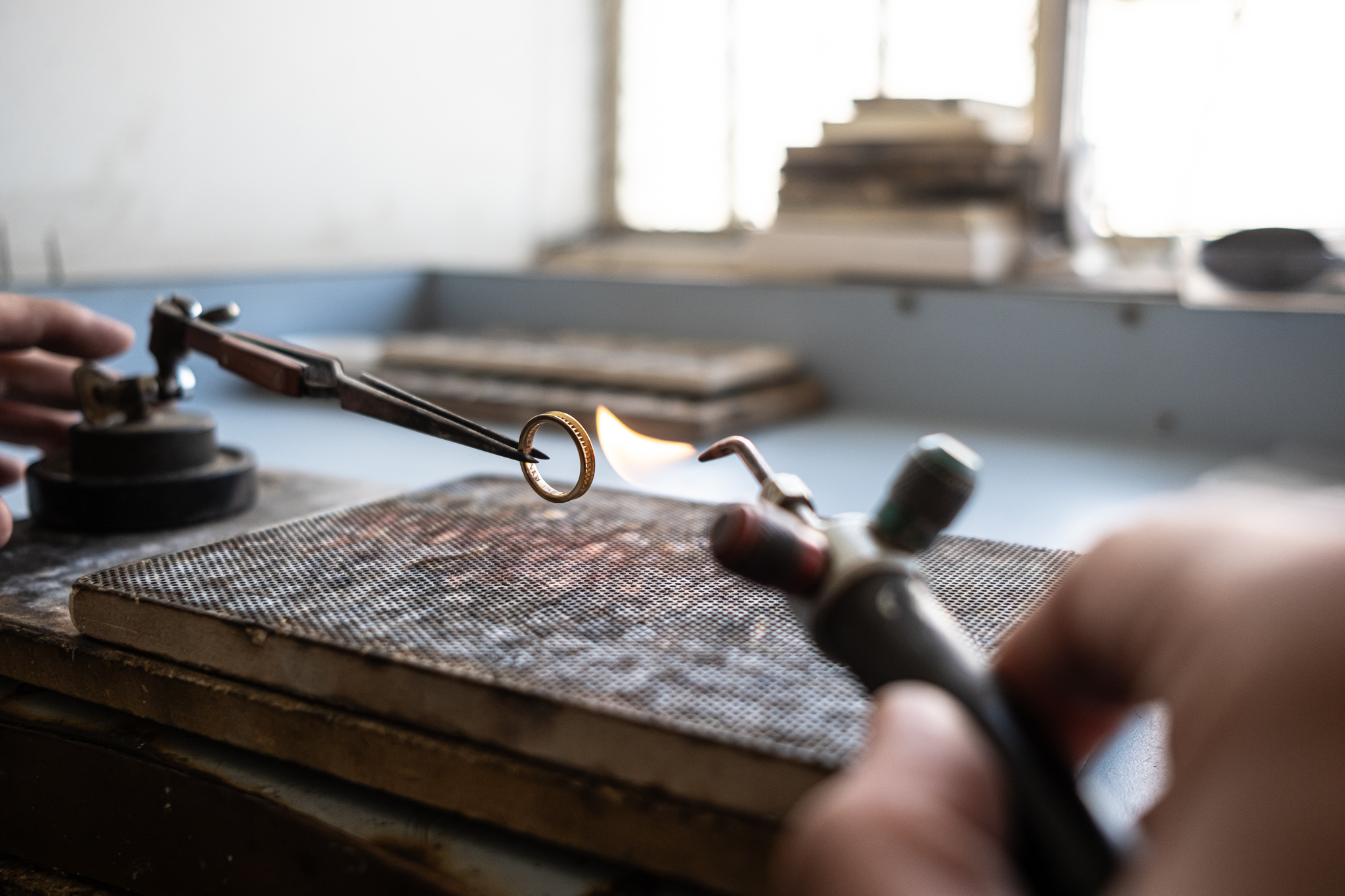
Smart brands look for a custom jewelry manufacturer with a global footprint that matches the material. For example:
- Armenia: Known for world-class craftsmanship in high-end gold and silver.
- Italy: Still the undisputed king of high-quality chain manufacturing.
- Indonesia: Perfect for intricate hand-finishing and ethical, large-scale production.
✔ PRO TIP: Ask if they have dedicated lines for different metals to avoid cross-contamination and ensure the highest purity.
✘ RED FLAG: A "one-room-does-it-all" setup that treats gold the same as base metals.
3. HOW DO YOU HANDLE IP AND DESIGN SECURITY?
Your designs are your brand’s lifeblood. In the digital age, "design theft" is a real concern. You’ve probably seen stories of brands finding their unique designs on discount marketplaces before they even finished their own launch.
When you're vetting a manufacturing jeweler, you need to know their internal security protocols. Do they have NDAs in place? How do they manage their CAD files? At Atila, we treat your IP like our own. We act as your private production partner, ensuring that what happens in our facility stays in our facility.
✔ LOOK FOR: Signed agreements and a track record of working with reputable brands who we serve.
✘ STAY AWAY FROM: Manufacturers who post their "clients' latest work" on public social media without permission.
4. WHAT IS THE COMMUNICATION FLOW?
Nothing kills a production timeline faster than a 3-day wait for an email reply because of time zone differences or a "lost in translation" moment. You need to feel like your manufacturer is in the office right next to you.
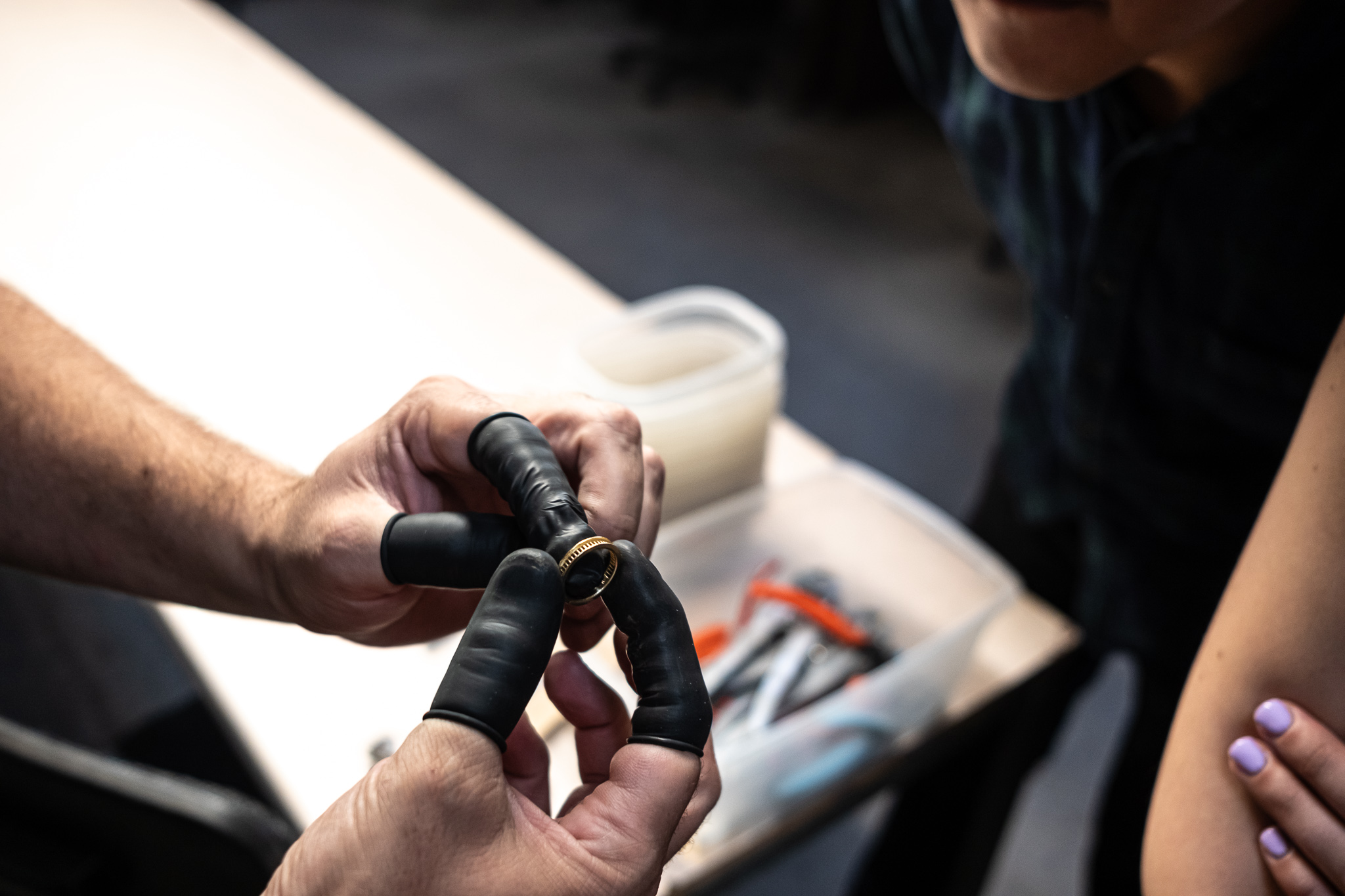
The best partnerships are built on transparency. You shouldn't have to chase your custom jewelry manufacturer for updates. At Atila, we pride ourselves on being an "in-house" partner. We handle the heavy lifting globally, but our communication is seamless, direct, and professional.
- Do they provide regular status updates?
- Is there a dedicated account manager?
- Do they understand the nuances of your brand voice?
✔ GOAL: A partner who anticipates problems before they happen.
✘ REALITY CHECK: If they’re hard to reach during the "sales" phase, imagine how hard they’ll be to reach when there’s a production delay.
5. CAN YOU SHOW ME REAL FACTORY FLOORS, NOT JUST RENDERINGS?
We’ve all seen the flashy 3D renderings that look like a futuristic lab. But jewelry manufacturing is a gritty, hands-on, highly skilled trade. It involves heat, dust, precision tools, and years of manual training.
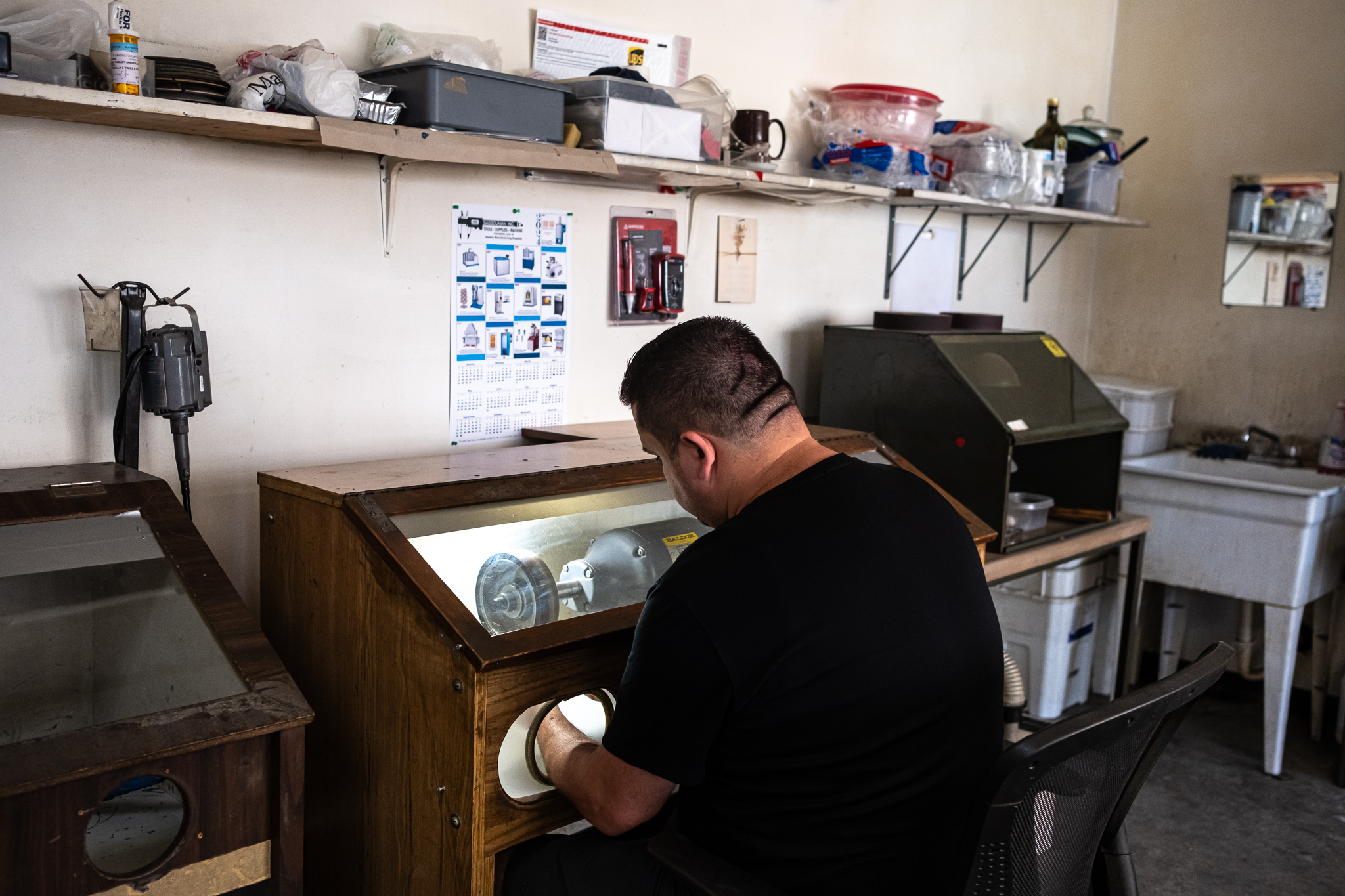
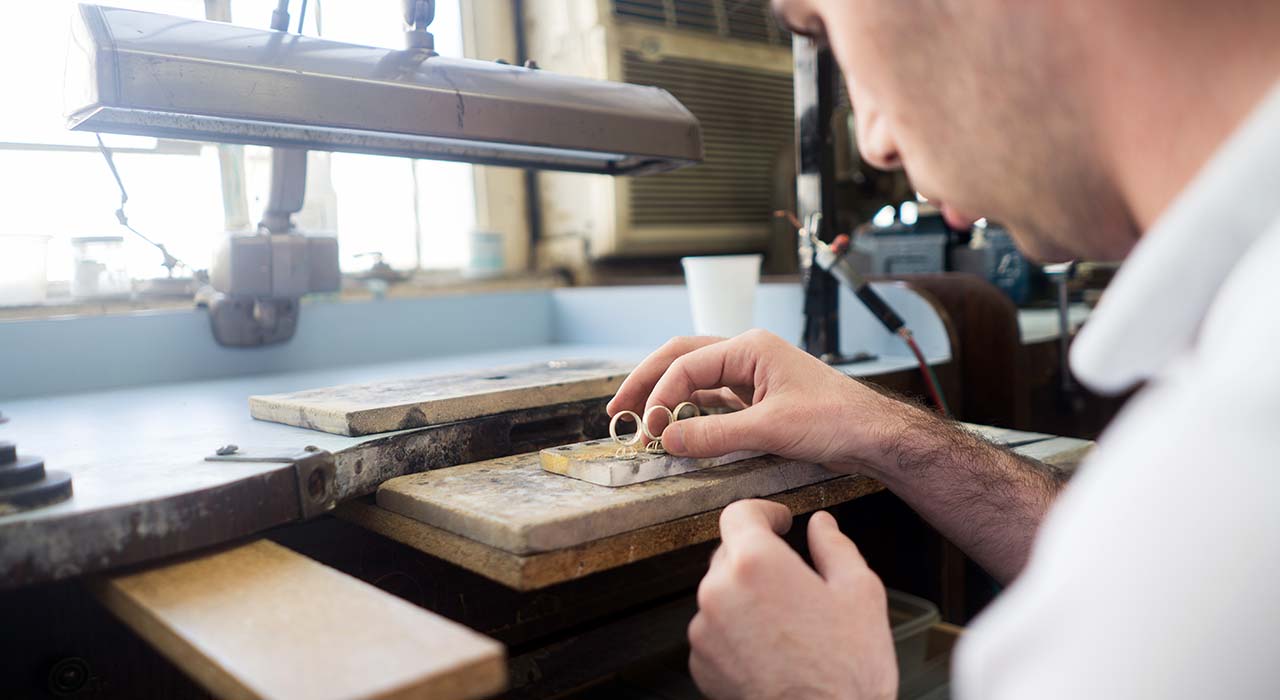
If a manufacturer can't (or won't) show you where the magic happens, ask yourself why. We love showing off our facilities because they represent the soul of Atila. Seeing a technician at a polishing station or a jeweler at a soldering bench tells you more about quality than a thousand-page catalog ever could. You want to see what we do in action.
✔ DEMAND: Real photos or video tours of the production line.
✘ BEWARE: Stock photos of people in lab coats who have clearly never touched a jeweler's saw.
6. DO YOU MANAGE THE END-TO-END PROCESS (CONCEPT TO CREATION)?
Fragmentation is the enemy of quality. If you have to go to one person for CAD, another for casting, and another for ecoating, things will go wrong. The "handoff" is where most mistakes happen.
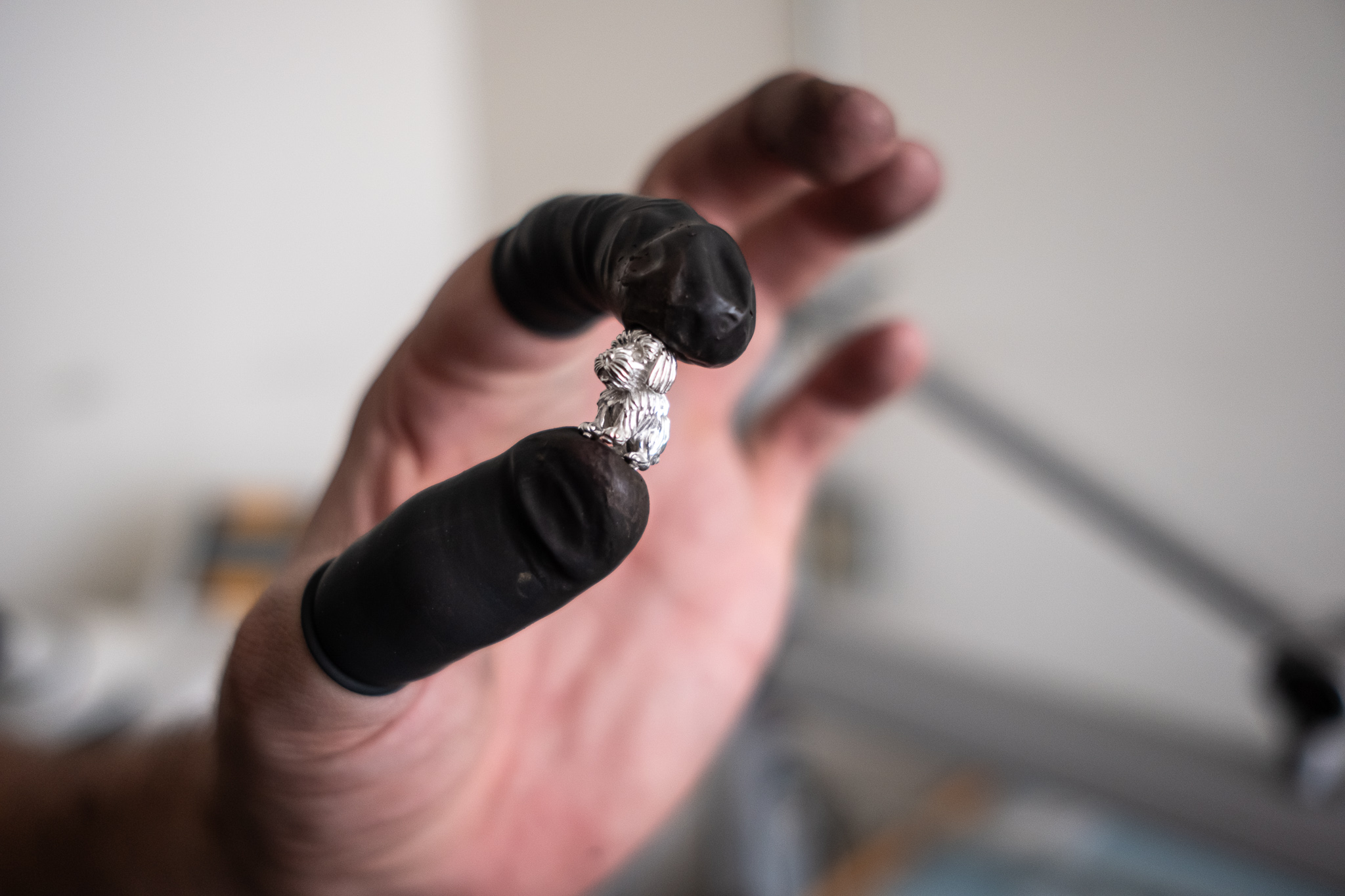
A true custom jewelry manufacturer should offer a vertical solution.
- Design & CAD: Turning your sketch into a technical reality.
- Prototyping: Creating that first physical sample you can hold.
- Casting & Assembly: The heavy lifting of production.
- Finishing: The polishing and plating that makes it shine.
When one team manages our process from start to finish, the accountability is 100%. If something isn't right, there’s no finger-pointing: just a solution.
7. HOW DO YOU HANDLE QUALITY CONTROL AT DIFFERENT PRICE POINTS?
"Quality" means something different if you're selling a $40 fashion piece versus a $4,000 engagement ring. A smart manufacturing jeweler knows how to adjust their QC (Quality Control) standards to fit your brand's price point without ever being "sloppy."
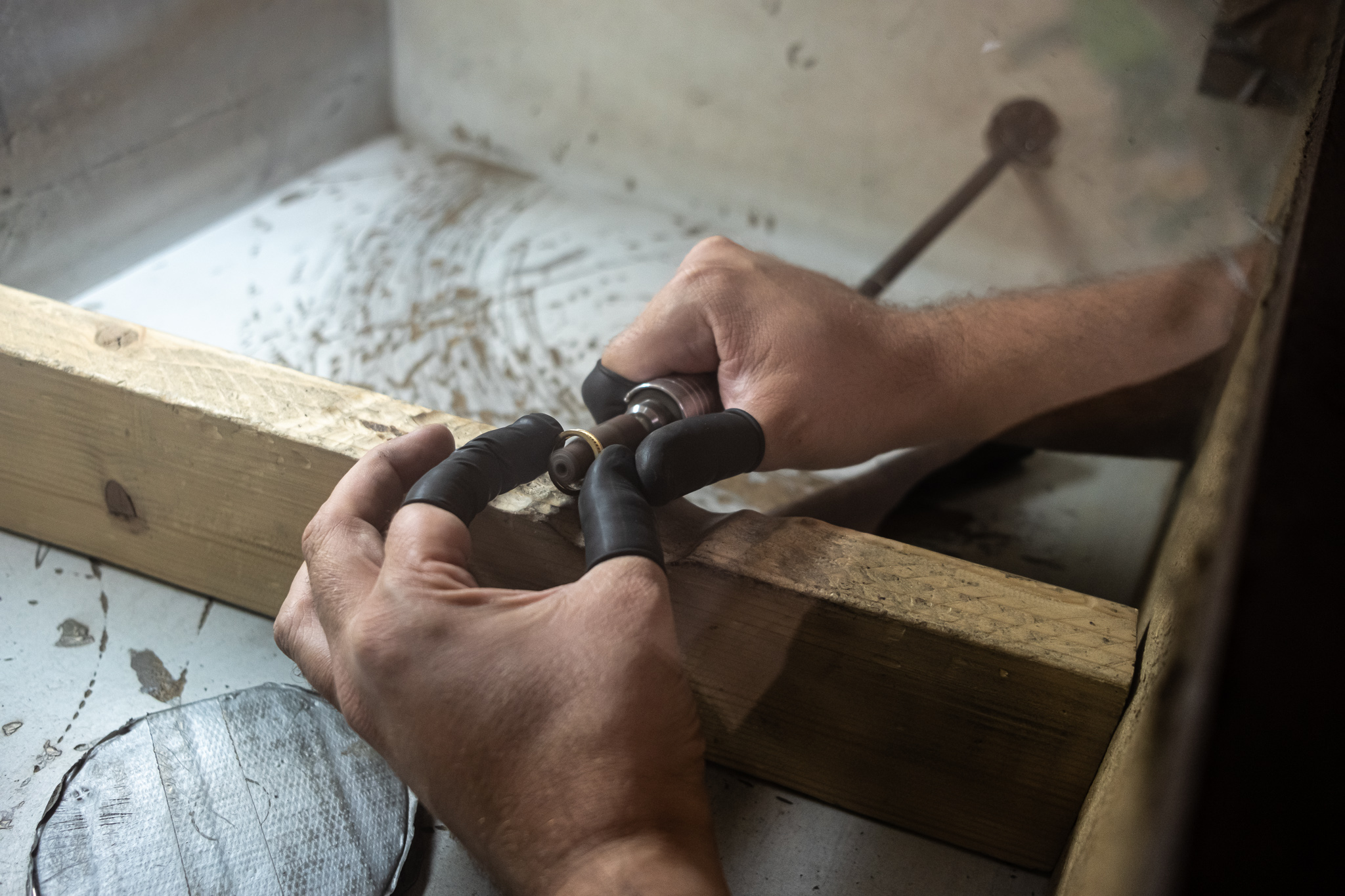
Ask them about their QC stages. Do they check the stones after setting? Do they perform pull-tests on chains? What is their acceptable defect rate? At Atila, we believe every piece that leaves our floor is a reflection of our brand and yours. We help you navigate private label vs. custom manufacturing to find the perfect balance of cost and craftsmanship.
✔ EXPECT: Multiple checkpoints throughout the production line.
✘ REJECT: "We'll fix it on the next order" mentalities.
WHY ATILA IS THE ANSWER TO ALL SEVEN
Choosing the right partner is a big decision. We get it. You’re looking for someone who understands that jewelry isn't just "product": it’s an emotional connection between your brand and your customer.
At Atila, we’ve spent years perfecting the art of being that "perfect fit" partner. We offer the scale of a global powerhouse with the soul of a boutique artisan. Whether you need the precision of our Armenian workshops, the efficiency of our 750-person Indonesian team, or the local touch of our Los Angeles presence, we are here to bring your vision to life.
Ready to stop searching and start creating? Let’s talk about your goals. We’d love to show you how we can turn your designs into a remarkable reality.
Cheers,
The Atila Team

LET’S TALK ABOUTYOUR PROJECT
Schedule a 30-minute consultation to discuss your goals and learn more about how we can help bring your vision to life.
Jewelry has the power to be the one little thing that makes you feel unique.
— ELIZABETH TAYLOR
USA Jewelry Manufacturers vs Overseas: Which Is Better For Your Brand in 2026?
USA Jewelry Manufacturers vs Overseas: Which Is Better For Your Brand in 2026?
![[HERO] USA Jewelry Manufacturers vs Overseas: Which Is Better For Your Brand in 2026?](https://atila.com/wp-content/uploads/2026/02/Atila-Jewelry-Manufacturing-Gold-and-Diamonds.jpg)
Dear Reader,
If you're building or scaling a jewelry brand in 2026, you've likely hit this fork in the road: Do I manufacture in the USA or go overseas?
It's not a simple answer. Both options have real advantages. Both come with trade-offs. And the "right" choice depends entirely on where your brand is headed, what you value, and how you want to position yourself in an increasingly conscious market.
So let's break it down: clearly, honestly, and without the sales pitch.
THE 2026 LANDSCAPE: WHAT'S CHANGED
Here's the thing: the jewelry manufacturing world looks different than it did even two years ago.
Supply chain disruptions taught brands hard lessons about lead times and reliability. Tariffs reshaped cost structures. And consumer demand for transparency and ethical sourcing hit an all-time high: 78% of American consumers now check if diamonds are ethically sourced before making a purchase.
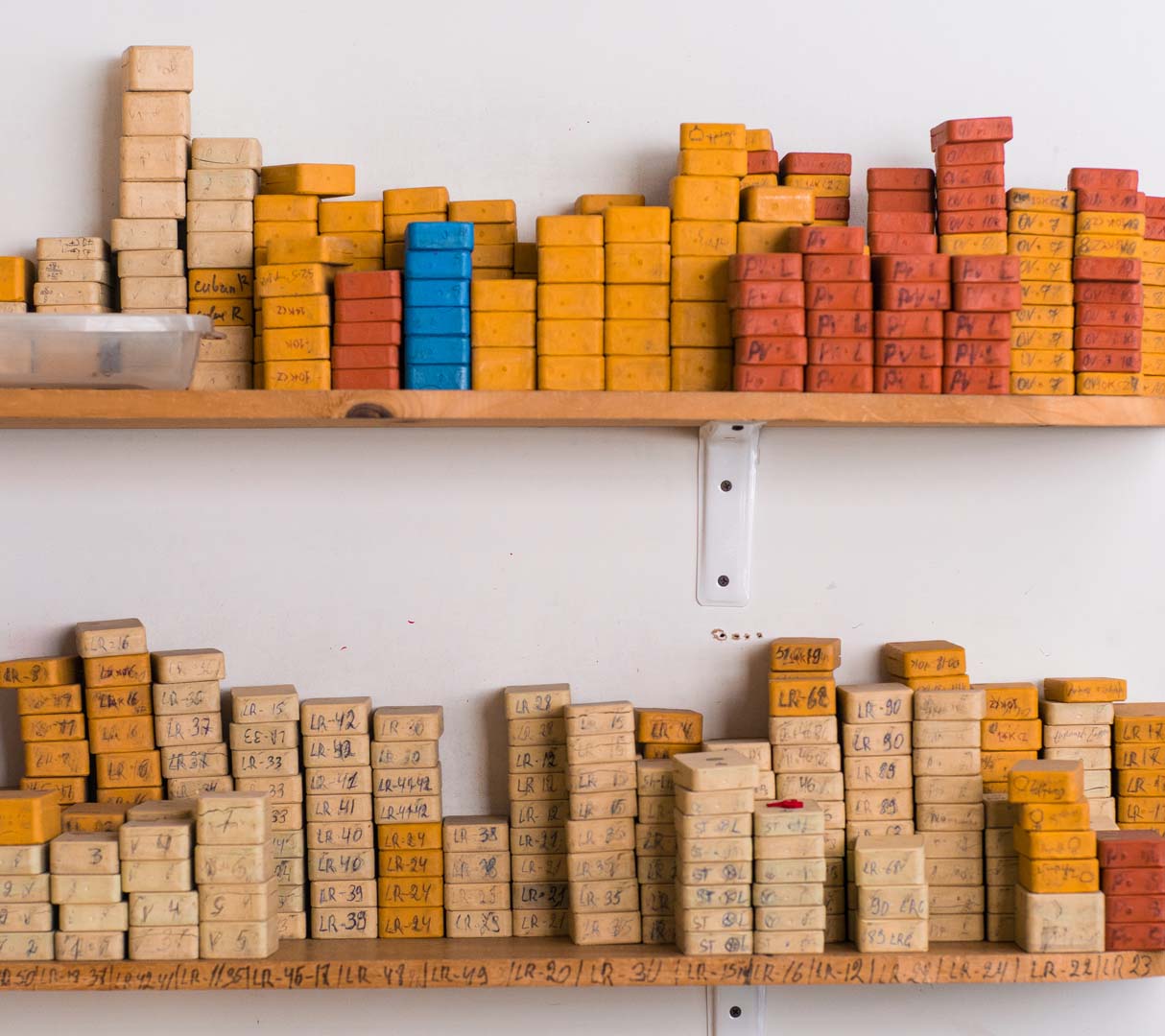
The industry is also seeing a shift toward nearshoring and hybrid models, where brands combine offshore cost advantages with domestic production for speed-sensitive or high-value pieces. The old binary choice of "USA vs. overseas" is evolving into something more nuanced.
But let's start with the fundamentals.
WHY USA JEWELRY MANUFACTURERS WIN ON SPEED AND CONTROL
FASTER TIME-TO-MARKET
When you work with a jewelry manufacturer in Los Angeles or another U.S. hub, you're typically looking at weeks, not months.
No ocean freight delays. No customs hold-ups. No wondering if your samples are stuck at a port halfway around the world. If you need to iterate on a design or respond to a trend quickly, domestic production gives you that agility.
This matters especially if you're launching seasonal collections, testing new designs with your audience, or responding to real-time market feedback. Speed wins in today's retail environment.
SUPERIOR QUALITY CONTROL AND COMMUNICATION
Let's be honest: Quality control is easier when you can visit the factory.
With USA jewelry manufacturers, you can schedule site visits, inspect prototypes in person, and build relationships with the people actually making your pieces. You're in the same time zone. You speak the same language. And if something needs adjusting, it happens in a conversation: not a 12-hour email lag.
At Atila, we've built our reputation on acting as an in-house extension of your brand. We don't just take orders. We collaborate on design, provide technical guidance, and maintain the kind of communication standards you'd expect from your own team. And when overseas manufacturing is the better fit, we can still keep you supported with clear specs, tight quality checkpoints, and consistent communication—so you’re not managing the process alone.
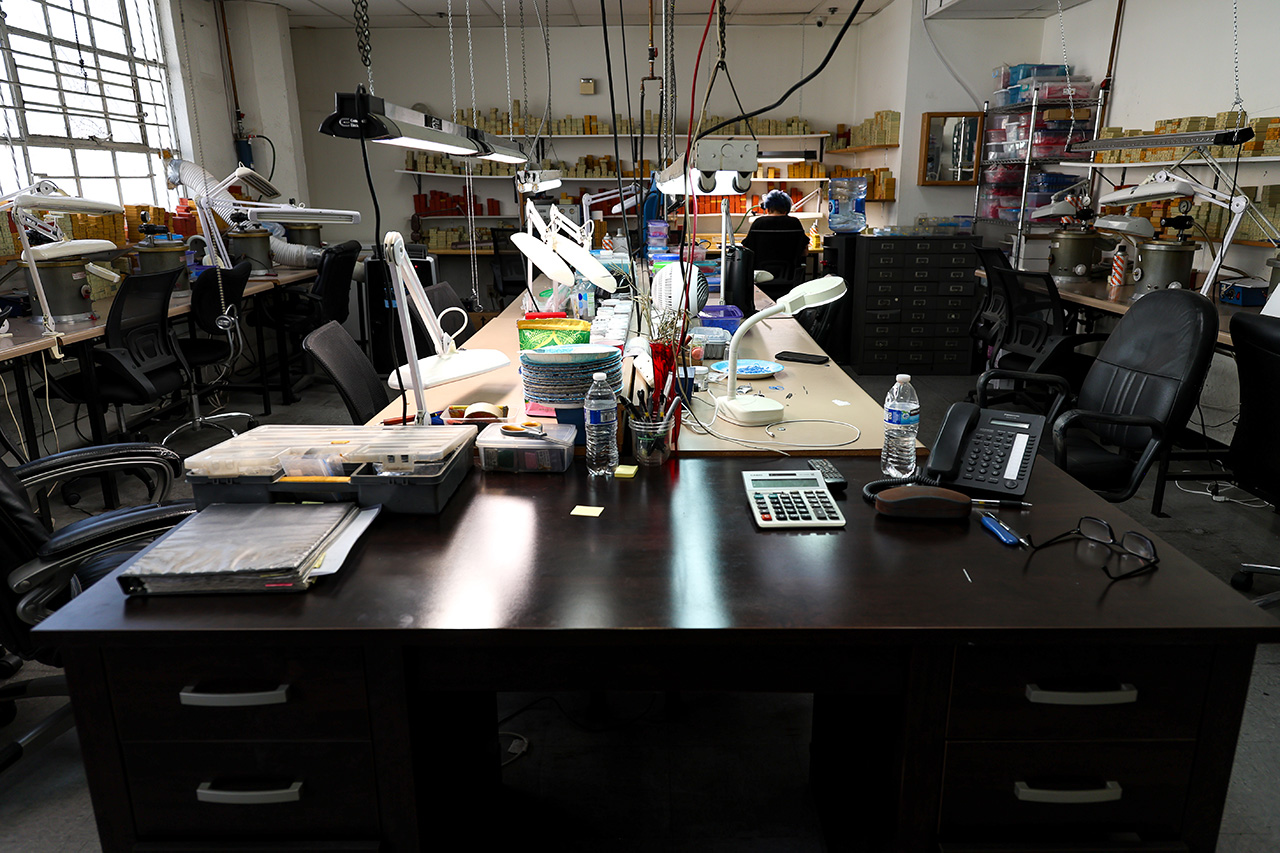
INTELLECTUAL PROPERTY PROTECTION
If your designs are proprietary: if they're what differentiates your brand: IP protection should be top of mind.
U.S. manufacturers operate under stricter legal frameworks. Design theft is easier to pursue legally. And frankly, the risk is just lower. You're not worrying about your sample designs showing up on Alibaba three months later.
THE "MADE IN USA" MARKETING ADVANTAGE
For certain customer segments, "Made in USA" isn't just a label: it's a value statement.
It signals ethical labor practices, environmental standards, and quality craftsmanship. In premium and luxury jewelry markets, it can justify higher price points and build brand loyalty. If your brand story includes sustainability or conscious production, domestic manufacturing gives you a powerful, verifiable claim.
WHEN OVERSEAS MANUFACTURING MAKES SENSE
That said, let's not pretend offshore production doesn't have legitimate advantages. It absolutely does.
COST EFFICIENCY AT VOLUME
Overseas manufacturing offers substantially lower production costs. Period.
If your business model requires high volumes at competitive price points: think fashion jewelry, mass-market accessories, or value-driven brands: the economics of offshore production are hard to beat. India, for example, handles $11.7 billion in U.S. jewelry imports and excels at diamond cutting, polishing, and large-scale manufacturing. Israel brings high-tech capabilities and diamond trading expertise.
These regions have built mature ecosystems specifically for jewelry production. They've invested in infrastructure, trained workforces, and supply chain efficiencies that can support massive order volumes.
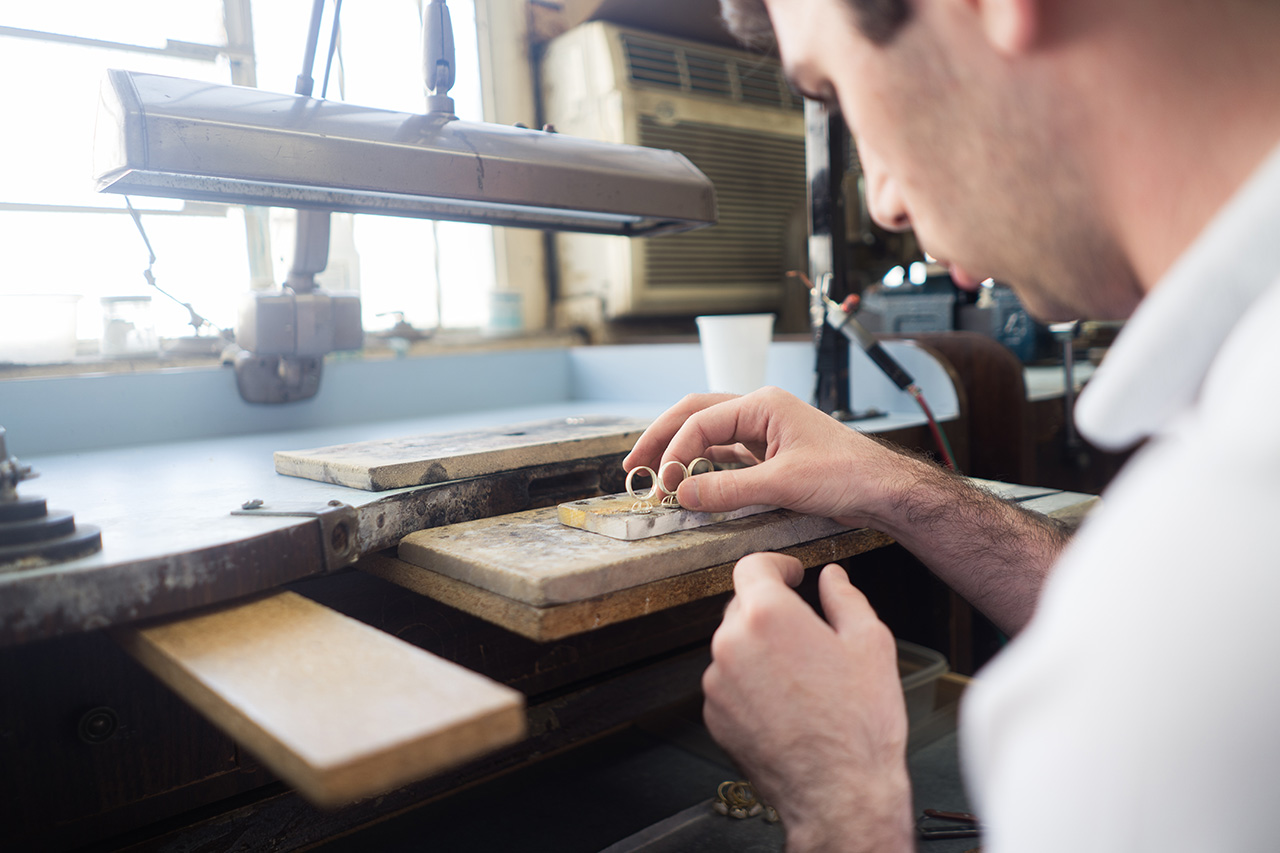
SPECIALIZED EXPERTISE AND CAPACITY
Certain countries have developed deep expertise in specific processes: gemstone cutting in India, enameling in China, particular metalwork techniques in Thailand.
If your designs require highly specialized skills or ultra-high-volume capacity that U.S. manufacturers can't match, overseas production might be necessary. Just know what you're trading for that capacity.
KEY CONSIDERATIONS FOR YOUR BRAND IN 2026
So how do you actually decide? Here are the critical questions to ask yourself:
1. What's your brand positioning?
If you're building a luxury, premium, or conscious brand, USA manufacturers align better with your story. If you're competing primarily on price in the mass market, overseas production may be required.
2. How important is speed to market?
Do you need to respond to trends in weeks, or can you plan six months ahead? Domestic manufacturing gives you flexibility. Offshore requires longer planning cycles.
3. What's your order volume?
Custom jewelry manufacturers in the USA excel at jewelry manufacturing at scale for mid-to-high volume brands, but if you're ordering 50,000+ units per SKU, overseas capacity might be necessary.
4. How hands-on do you need to be?
If you want collaborative design support, regular communication, and the ability to visit your manufacturing partner, choose a jewelry manufacturer in Los Angeles or another U.S. hub. If you're comfortable with longer lead times and less direct oversight, offshore can work.
5. What are your ethical standards?
Your customers are asking. Be honest about what matters to your brand and whether you can verify labor practices, material sourcing, and environmental impact with your chosen partner.
THE HYBRID APPROACH: NEARSHORING AND STRATEGIC PARTNERSHIPS
More brands are adopting hybrid models in 2026.
They might manufacture high-value or trend-sensitive pieces domestically while producing staple items overseas. They might prototype in the USA with a partner like Atila, then scale certain styles offshore once designs are finalized.
There's no rule that says you have to choose only one path. The smartest brands are strategic about where each piece is made and why.
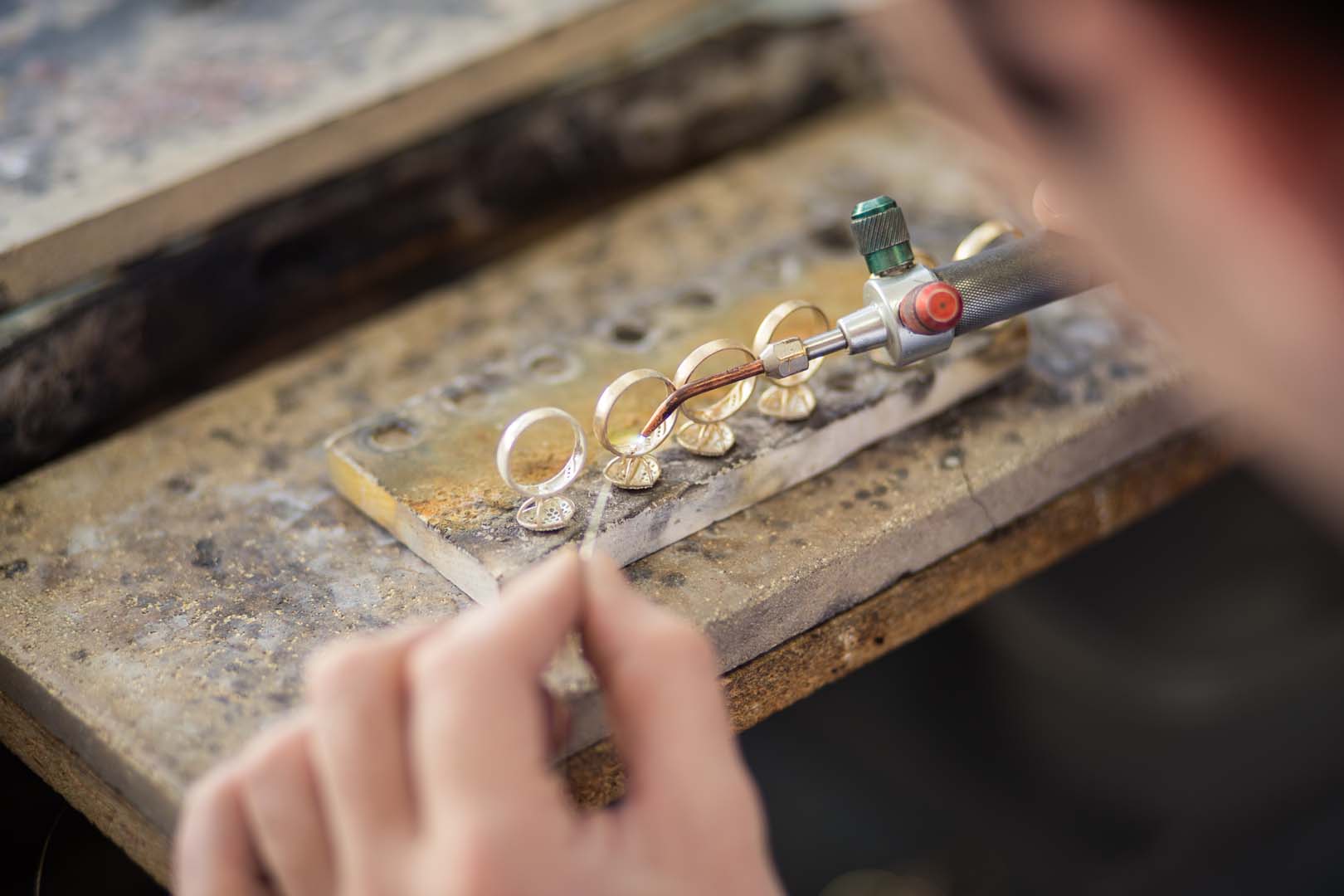
OUR TAKE: WHEN ATILA IS THE RIGHT PARTNER
Look, we're not going to tell you that every brand needs to manufacture in the USA. That wouldn't be honest, and it wouldn't serve you.
But if your brand values design differentiation, quality craftsmanship, speed to market, and collaborative partnerships, then working with custom jewelry manufacturers in the USA makes sense.
And if your brand needs overseas manufacturing for cost, capacity, or specialized processes? That can make perfect sense too. What matters is having a partner who can help you choose the right path (or a hybrid), lock in the details, and protect quality as you scale.
At Atila, we offer Los Angeles-based manufacturing and overseas manufacturing, and we help brands use either—or both—depending on what you’re building.
Specifically, our overseas capabilities are built to match different goals (volume, price point, or ultra-premium finishing):
- Indonesia: a massive 750+ person team built for large-scale production when you need serious capacity.
- Armenia: a high-end facility focused on super high-quality gold and silver work when details and finishing truly matter.
- Italy: large-scale chain manufacturing for brands that need consistent, repeatable chain production at scale.
So whether you’re keeping production close to home in Los Angeles, going overseas for volume, or building a hybrid supply chain, you’re not choosing between “two worlds.” You’re getting one versatile, global partner.
We handle everything from design and prototyping to full production runs, ecoating, and fulfillment. We work with emerging brands launching their first collection and established labels expanding their lines.
And we do it with the kind of communication, transparency, and attention to detail that you'd expect from an in-house team.
FINAL THOUGHTS
The choice between USA and overseas jewelry manufacturing isn't about right or wrong. It's about alignment.
What does your brand stand for? What do your customers care about? What are your actual constraints: budget, timeline, volume, quality standards?
Answer those questions honestly, and the path forward becomes clearer.
If you're ready to explore what's possible with a Los Angeles-based manufacturing partner who prioritizes quality, speed, and collaboration, let's talk. We're here to help you bring your vision to life: whether that's your first collection or your next phase of growth.
Cheers,
Atila Team
LET’S TALK ABOUTYOUR PROJECT
Schedule a 30-minute consultation to discuss your goals and learn more about how we can help bring your vision to life.
Jewelry has the power to be the one little thing that makes you feel unique.
— ELIZABETH TAYLOR
Protecting Your Brand Reputation with Transparent Manufacturing Partnerships
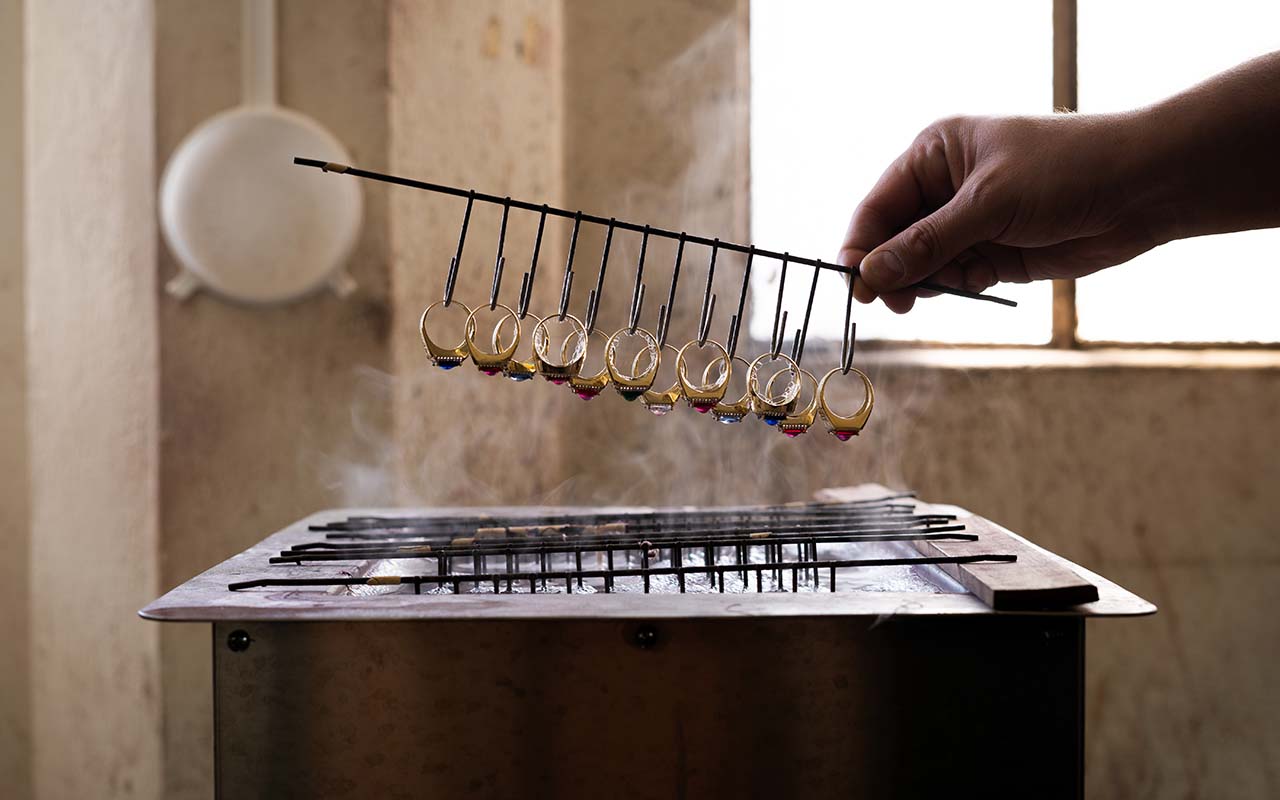
When jewelry brands compare manufacturers, one of the most common and critical questions is: does jewelry manufacturing have hidden fees? For growing brands and established labels alike, clarity around pricing and process isn’t just a “nice-to-have” – it plays a fundamental role in protecting brand reputation, ensuring predictable profit margins, and building long-term partnerships that support growth.
At Atila Jewelry Manufacturing, transparency isn’t an afterthought – it’s central to how the company works with brands, creators, and businesses. This post breaks down how transparent contracts, open communication, and clear service structures help partner brands eliminate surprises and position themselves for success.
Why Transparency Matters in Jewelry Manufacturing
In custom jewelry production, multiple elements contribute to the final cost of a piece: design, materials, prototyping, production, finishing, and packaging. When pricing structures are vague, brands often encounter unexpected fees or overlooked charges that can disrupt budgets, delay go-to-market timelines, and ultimately affect customer trust.
For brands comparing manufacturers, understanding the full cost of production up front is essential. Transparency in manufacturing protects your brand by ensuring you know exactly what you’re signing up for – from design stages through delivery – without unexpected financial surprises.
Does Jewelry Manufacturing Have Hidden Fees?
A common industry concern is whether jewelry manufacturers add hidden fees – extra charges that appear after a contract is signed or during production. At Atila Jewelry Manufacturing, their FAQ section addresses this concern directly: “No hidden fees, no added extras, no tariffs.” The only early-stage charge clients can expect is the sample fee starting at a defined amount, and all future costs are defined after initial discussions about design, materials, and quantities.
This openness helps brands avoid unforeseen costs and protects their brand reputation by ensuring budgeting accuracy and predictable financial outcomes.
Transparent Contracts: The Backbone of Brand Protection
One of the most impactful ways a jewelry manufacturer protects a brand’s reputation is through transparent contracts. Atila’s approach is centered around working with clients on budget and timeline expectations before any formal production begins. This includes:
- Clearly outlined deliverables
- Defined production costs based on materials and complexity
- Explicit production timelines and milestones
Contracts that reflect these elements help brands make informed decisions and eliminate disputes over scope and costs later in the process.
Brands who partner with Atila enter contracts with confidence because every cost is discussed and disclosed before it appears on an invoice. This sets expectations clearly and builds trust that extends beyond a single order.
Open Communication Throughout the Process
Communication is not just about returning emails or answering questions – it’s about ensuring that you, as a brand owner, understand each stage of the manufacturing lifecycle. Atila’s process emphasizes ongoing collaboration between your team and theirs.
In the initial consultation, Atila discusses your goals, design vision, budget, and timeline. From there, clients receive renderings and prototypes, and any revisions or feedback are addressed through clear dialogue. This means adjustments to design or specifications don’t come with hidden price tags – they come with a clear understanding of how those changes affect cost and production schedule.
This level of service clarity allows brands to confidently manage internal expectations and reassure stakeholders that production is on track – without unwelcome surprises.
Service Clarity, From Concept to Delivery
Service clarity isn’t just about pricing transparency – it’s about ensuring brands understand what they’re paying for at every step. Atila’s service structure is built to support this through a clearly defined workflow:
- Initial Consultation: Discussion around your project goals, materials, expected timeline, and budget.
- Design and Prototyping: Atila presents renderings and physical prototypes for your approval.
- Production: After design approval, manufacturing begins based on the agreed specifications and pricing.
- Ongoing Partnership: Once a brand has completed one project, the relationship continues to grow as new designs and opportunities arise.
At each stage, brands are equipped with detailed information about costs and expectations. There’s no ambiguity about what’s included in the quote – every element that affects pricing is discussed openly before moving forward.
Atila’s Manufacturing Packages: Clear Cost Structures
Atila offers a range of packages tailored to the needs of different brands, each with transparent pricing and defined deliverables. Their package options include:
- Fashion Starter Package: Includes CAD design, revisions, sample prototypes, and factory credit toward production.
- Brand Strategy Package: A comprehensive solution with strategic brand planning and manufacturing.
- Made-To-Order Retainer: Ideal for brands with existing designs ready for production at scale.
- Consulting Services: One-on-one expert consulting with transparent hourly rates.
Each package describes the scope of services and pricing expectations clearly, allowing brands to choose the right one for their stage of growth and avoid the pitfalls of ambiguous manufacturing contracts.
Eliminating Uncertainty with Made-To-Order Programs
For brands aiming to balance inventory risk with customization, Atila’s Made-To-Order (MTO) program offers a compelling example of transparent service execution.
Under MTO, brands work with Atila to produce designs as orders come in – eliminating the need for wholesale inventory investment while ensuring cost and timeline expectations are spelled out from the outset. The process begins with a prototype and cost estimation, followed by prompt production and fulfillment based on actual demand. Fulfillment services – including packaging and shipping – are also defined clearly within this program.
This clarity enables brands to manage cash flow effectively and mitigate financial surprises often associated with traditional bulk manufacturing.
Brand Protection Through Ethical and Reliable Production
While pricing transparency is a major part of protecting your brand, there’s also value in knowing that you’re partnering with a manufacturer who offers ethical production practices and consistent quality.
Atila’s leadership and global facilities – including locations in Los Angeles, Italy, Armenia, and Indonesia – allow them to provide manufacturing solutions that align with diverse business needs and quality standards.
Additionally, manufacturing in Los Angeles offers brands advantages in predictability and control. With a domestic facility, there are no tariffs or unpredictable international charges, and the communication is aligned with your business hours and expectations.
These factors contribute to a manufacturing partnership that respects your brand values and enables predictable outcomes throughout production cycles.
How Brands Can Evaluate Potential Hidden Fees
Even with transparent partners like Atila, it’s helpful for brands to have a framework for evaluating potential hidden costs when comparing manufacturers:
- Ask for itemized quotes that break down each component of production.
- Confirm whether sample fees, tooling charges, and revisions are included in the initial pricing.
- Understand whether packaging, labeling, and fulfillment are part of the quoted cost or separate.
- Review whether tariffs, shipping fees, and import charges are included or excluded.
With a partner like Atila, where hidden fees are expressly avoided and costs are communicated clearly, brands can compare multiple proposals with confidence.
Final Thoughts: Choosing Transparency to Protect Your Brand
In an industry where hidden charges and ambiguous terms can erode profit margins and brand reputation, working with a manufacturer that prioritizes transparency is not just strategic – it’s essential.
Atila Jewelry Manufacturing’s model of clear pricing, transparent contracts, open communication, and service clarity ensures brands have full visibility into the cost and process of jewelry production – with no surprises, no hidden fees, and no ambiguity.
For brands comparing manufacturers and seeking to protect both their financial interests and their reputation in the market, transparency isn’t optional – it’s a competitive advantage. With Atila, transparency is built into every relationship, ensuring you can focus on design, growth, and customer experience – knowing your manufacturing partner is aligned with your brand’s success. To learn more about working with Atila Jewelry Manufacturing, contact the team to discuss your project, pricing, and production goals.
FAQ
1. Does jewelry manufacturing have hidden fees?
No – Atila states there are no hidden fees, added extras, or tariffs beyond the disclosed costs.
2. What costs should I expect upfront when working with Atila?
Brands can expect clear pricing for materials, design, prototyping, and manufacturing after initial consultation.
3. Is a sample fee required before production?
Yes – a sample fee is typically charged early in the process and is communicated clearly before work begins.
4. Are contracts transparent about deliverables and costs?
Yes – Atila provides clear contracts outlining services, timelines, and pricing to eliminate ambiguity.
5. Does Atila provide ongoing communication during production?
Yes – brands receive regular updates and collaborative communication throughout the design and manufacturing process.
LET’S TALK ABOUTYOUR PROJECT
Schedule a 30-minute consultation to discuss your goals and learn more about how we can help bring your vision to life.
Jewelry has the power to be the one little thing that makes you feel unique.
— ELIZABETH TAYLOR
How Does Made-to-Order Jewelry Empower Modern Brands?
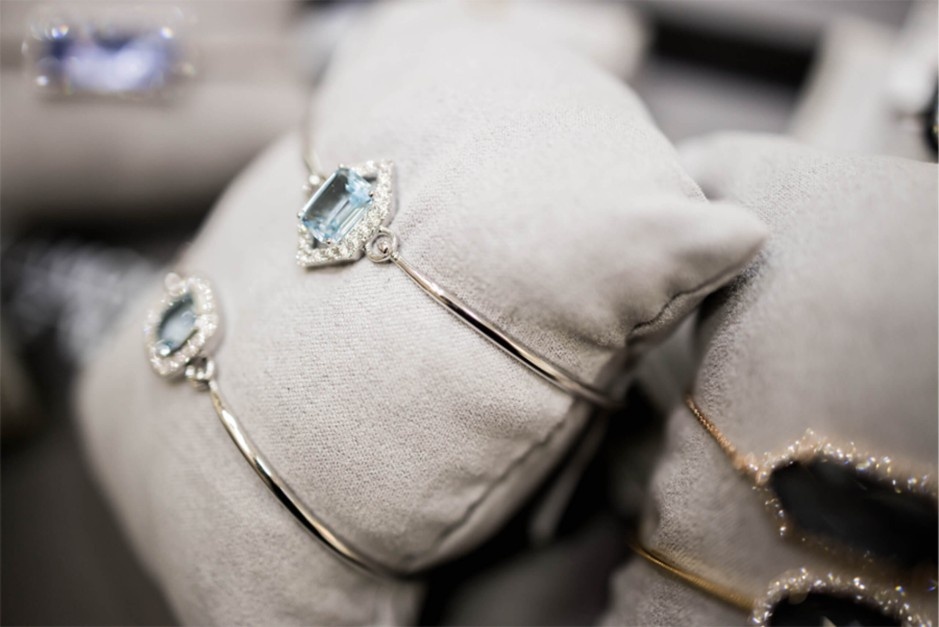
In the evolving luxury jewelry landscape, established brands are under increasing pressure to balance creativity, efficiency, and sustainability. Traditional inventory-heavy manufacturing models often expose brands to stock risk, high overheads, and inflexible production cycles. Made-to-order jewelry manufacturing has emerged as a strategic solution that allows brands to respond to market demand with precision while maintaining uncompromising quality standards. For B2B jewelry brands, this approach transforms manufacturing from a cost center into a competitive advantage.
Atila Jewelry Manufacturing supports modern brands by offering a made-to-order model that aligns production with real demand. By eliminating excess inventory, streamlining prototype-to-delivery workflows, and enabling flexible production, MTO empowers brands to scale intelligently while preserving craftsmanship and brand value.
Understanding Made-to-Order Jewelry in Modern Manufacturing
What Is Made-to-Order Jewelry?
Made-to-order jewelry is a manufacturing approach where pieces are produced only after a design is approved or an order is placed, rather than being mass-produced in advance. For established and luxury brands, this model provides greater control over production volumes, materials, and timelines. Instead of forecasting demand months ahead and risking overproduction, brands can manufacture with confidence, knowing each piece serves a defined purpose.
In a B2B context, MTO is not about customization for individual consumers. It is about empowering brands with a responsive manufacturing framework that supports curated collections, limited releases, and strategic product launches. This ensures that every design entering production aligns with brand strategy and market demand.
Is Made to Order the Right Fit for Every Product?
Lower-cost items or less expensive materials are typically not ideal candidates, mainly because low-volume or low-investment programs often do not justify an MTO workflow. In some cases, the cost per piece can be higher depending on the product and manufacturers. High-volume best sellers and low cost items are also usually better produced in larger runs, where brands can order in volume and achieve a better price points.
The Shift from Stock-Based to Demand-Driven Production
The jewelry industry is moving away from stock-heavy models toward demand-driven production. As design cycles shorten and trends evolve faster, brands need manufacturing partners that can adapt quickly. Made-to-order jewelry manufacturing supports this shift by enabling a seamless design-to-market process where production decisions are informed by actual demand rather than assumptions.
For luxury brands, this transition enhances agility while preserving exclusivity. Demand-driven manufacturing ensures that collections remain relevant, controlled, and aligned with brand positioning. Made to Order and demand driven production are typically best for premium pieces, controlled releases, or styles where demand is less predictable.
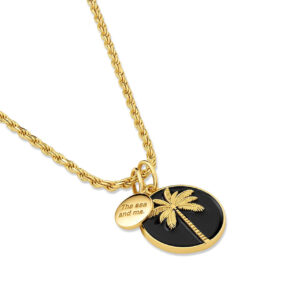
How Does Made-to-Order Jewelry Benefit Brands?
Eliminate Stock Risk Without Limiting Creativity
One of the most significant advantages of made-to-order jewelry is the ability to eliminate stock risk. Excess inventory can erode margins, occupy valuable storage space, and force brands into discounting strategies that dilute brand equity. MTO removes this burden by aligning production volumes with confirmed needs.
Importantly, eliminating stock risk does not mean limiting creativity. Brands can continue to innovate, explore new designs, and expand collections without the pressure of committing to large production runs. This freedom allows established brands to protect capital while investing confidently in design development.
Prototype-to-Delivery That Supports Faster Decision-Making
A structured prototype-to-delivery process is central to successful made-to-order manufacturing. Prototyping allows brands to evaluate design feasibility, craftsmanship standards, and production requirements before committing to manufacturing. This stage supports faster and more informed decision-making, reducing costly revisions later in the process.
By validating designs early, brands can move smoothly into production with clarity and confidence. This structured workflow shortens lead times and ensures that final pieces meet both aesthetic and technical expectations.
Flexible Production Models for Established and Luxury Brands
Flexible Production That Adapts to Market Demand
Luxury brands often face fluctuating demand influenced by seasonality, collections, and market trends. Made-to-order manufacturing offers flexible production that adapts to these changes without operational strain. Brands can scale production up or down based on performance, avoiding the inefficiencies of fixed-volume manufacturing.
This flexibility is particularly valuable for brands introducing capsule collections or testing new design directions. Production can remain controlled and responsive, allowing brands to remain competitive without unnecessary financial exposure.
Design-to-Market Alignment for Premium Jewelry Brands
The journey from design concept to finished jewelry requires precision and collaboration. Made-to-order manufacturing strengthens design-to-market alignment by ensuring that every stage of production supports the original design intent. Manufacturing considerations are integrated early, reducing misalignment between creative vision and execution.
For premium brands, this alignment protects quality, consistency, and brand identity. Designs move to market efficiently while retaining the craftsmanship and detail expected at the luxury level.
Sustainability and Efficiency Through Made-to-Order Manufacturing
Reduced Waste and Responsible Material Usage
Sustainability has become a strategic priority for modern luxury brands. Made-to-order jewelry manufacturing inherently supports sustainability by reducing waste and optimizing material usage. Because production is aligned with demand, there is no excess stock requiring disposal or storage.
This responsible approach ensures that materials are used efficiently and intentionally. Brands can support sustainability goals while maintaining transparency and accountability throughout the manufacturing process.
Long-Term Cost Efficiency for B2B Jewelry Brands
Beyond environmental benefits, made-to-order manufacturing delivers long-term cost efficiency. Cost efficiency depends on mix and volume. For low-priced SKUs or repeat high-volume styles, larger production runs can deliver a lower per-piece cost than MTO. But for premium pieces, controlled releases, or styles where demand is less predictable, MTO drives efficiency. Brands reduce expenses related to storage, unsold inventory, and capital lock-up. Production planning becomes more accurate, and operational resources are allocated more effectively.
Over time, these efficiencies strengthen profitability and support sustainable growth. For established brands, MTO offers a path to operational resilience without compromising quality or craftsmanship.
Fulfillment Logistics That Support Global Jewelry Brands
Simplified Fulfillment Logistics in an MTO Model
Managing fulfillment logistics can be complex for jewelry brands operating across multiple markets. Made-to-order manufacturing simplifies this process by aligning production schedules with delivery timelines. Instead of managing bulk inventory and fragmented shipping processes, brands benefit from coordinated production and fulfillment.
This streamlined approach reduces logistical complexity and supports smoother operations, particularly for brands with international distribution networks.
Reliable Delivery Without Overstock Pressure
With made-to-order jewelry, delivery schedules are planned around actual production needs rather than inventory clearance. This ensures predictable fulfillment without the pressure of overstock. Brands can launch collections with confidence, knowing that production and delivery are aligned. Lead times can vary by material availability, stone sourcing, and production capacity, and can be managed through planning.
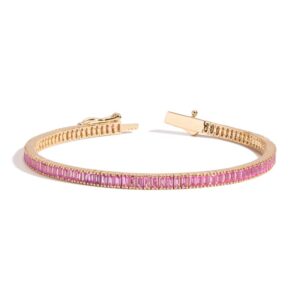
Why Established Brands Partner with Atila Jewelry Manufacturing
Manufacturing Expertise Built for B2B Jewelry Brands
Atila Jewelry Manufacturing operates as a dedicated B2B partner, supporting established and luxury brands through a structured made-to-order framework. With a focus on precision, quality, and scalability, Atila enables brands to execute complex designs while maintaining operational efficiency.
This partnership approach ensures that brands receive manufacturing support aligned with their strategic goals.
Enabling Brands Through End-to-End Made-to-Order Solutions
From initial design support to prototype development, flexible production, and fulfillment coordination, Atila delivers end-to-end made-to-order solutions. This integrated approach reduces friction, improves efficiency, and allows brands to focus on growth and innovation.
Conclusion
Made-to-order jewelry manufacturing empowers modern brands to operate with agility, sustainability, and precision. By eliminating stock risk, supporting flexible production, and strengthening design-to-market alignment, MTO transforms how established and luxury brands approach manufacturing.
With a trusted manufacturing partner like Atila Jewelry Manufacturing, brands can confidently scale, innovate, and adapt to market demands. In an industry where efficiency and craftsmanship must coexist, made-to-order jewelry stands as a strategic foundation for long-term success. Contact us to learn how Atila’s made-to-order manufacturing solutions can support your brand’s next stage of growth.
FAQ
1. What is made-to-order jewelry manufacturing?
Made-to-order jewelry manufacturing is a production model where jewelry is produced only after designs are approved or orders are confirmed, reducing excess inventory.
2. How does made-to-order jewelry benefit brands?
It helps brands eliminate stock risk, improve production efficiency, and align manufacturing with real market demand.
3. Is made-to-order jewelry suitable for luxury brands?
Yes, made-to-order manufacturing supports high craftsmanship standards, controlled production volumes, and premium brand positioning.
4. How does made-to-order production support sustainability?
By producing only what is needed, made-to-order manufacturing reduces material waste and unnecessary resource consumption.
5. What role does prototyping play in made-to-order jewelry?
Prototyping allows brands to validate designs, costs, and production feasibility before moving into full manufacturing.
LET’S TALK ABOUTYOUR PROJECT
Schedule a 30-minute consultation to discuss your goals and learn more about how we can help bring your vision to life.
Jewelry has the power to be the one little thing that makes you feel unique.
— ELIZABETH TAYLOR
What New Jewelry Designers Can Expect from a Fashion Starter Package
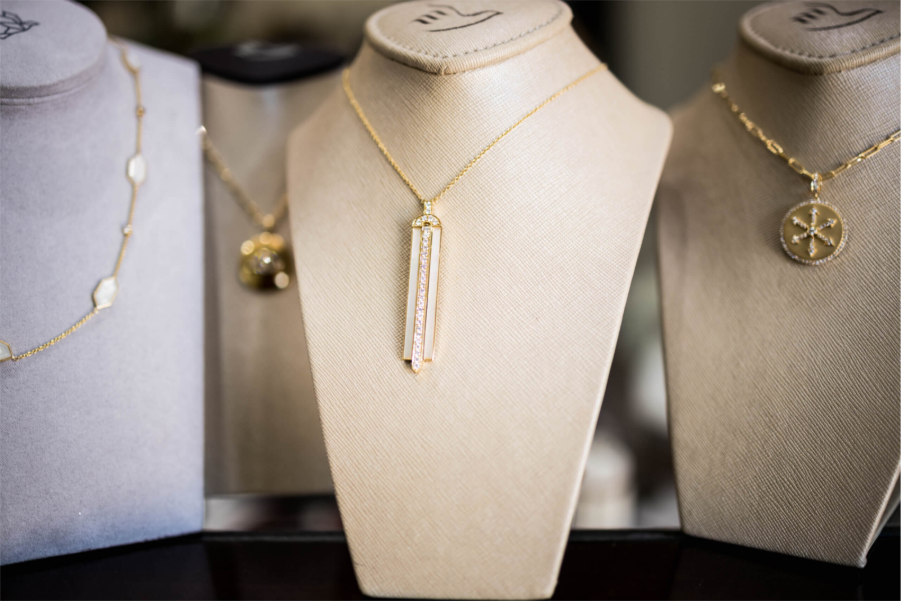
Entering the jewelry industry can be both exciting and overwhelming for new designers. From turning sketch concepts into real, manufacturable pieces to navigating technical specifications, materials, and brand development, the early stages come with many unknowns. This is where a Fashion Starter Package becomes essential. For emerging designers working on their first collection, understanding what is included in a fashion starter package can help streamline the journey from idea to market launch.
At Atila Jewelry Manufacturing, the focus is strictly B2B-serving designers and brands who need professional production support. Their Fashion Starter Package is built to give new designers the creative, technical, and manufacturing structure needed to confidently start a brand. Below, we break down everything that designers can expect from this comprehensive package and how it supports a smooth entry into the jewelry market.
Introduction – Why Fashion Starter Packages Matter for New Jewelry Designers
The jewelry market today is competitive, fast-paced, and highly quality-driven. New designers often struggle with the initial steps-creating production-ready designs, selecting materials, developing prototypes, and understanding how to work with a manufacturer. Without industry knowledge, many first-time designers face costly mistakes, design flaws, or delays.
A Fashion Starter Package eliminates this learning curve by providing structured support, clear deliverables, and step-by-step guidance. Instead of working with multiple vendors, a designer receives everything from CADs, prototypes, design guidance, creative consultations, and brand launch support from a single professional manufacturing partner.
Atila Jewelry Manufacturing specializes in helping emerging designers transform their ideas into collections ready for production and market launch. Their process is built for long-term growth and scaling-ideal for brands ready to establish themselves in the industry.
What Is Included in a Fashion Starter Package?
The heart of this blog focuses on the primary keyword: what is included in a fashion starter package? While packages can vary between manufacturers, Atila’s offering is designed to ensure first-time designers receive a complete foundation for production.
Here’s an in-depth breakdown:
1. Initial Creative Consultations & Design Guidance
Every great jewelry collection begins with a solid concept. But a sketch or idea must be translated into a design that can be manufactured correctly. Atila begins with creative consultations, where designers discuss their vision, inspirations, target audience, and intended materials.
This phase includes:
- Clarifying the design direction and aesthetic
- Aligning creativity with manufacturing feasibility
- Identifying potential technical challenges early
- Helping designers refine sketches into realistic design plans
This one-on-one support gives new designers confidence and ensures the concept aligns with industry standards before CAD creation begins.
2. Professional CADs (Computer-Aided Designs)
CADs are the backbone of professional jewelry manufacturing. They transform your ideas into scalable, precise digital designs that guide the entire production process. Atila’s expert CAD team creates:
- Detailed 3D renderings
- Accurate dimensions and stone settings
- Models optimized for casting and manufacturing
- CAD iterations until the design is finalized
For new designers, this step is crucial. It ensures every technical detail-thickness, proportions, prong spacing, durability-is correct before moving to samples or mass production.
CAD files also serve as essential assets for future productions and brand scaling.
3. Prototypes & Sampling
After CAD approval, Atila develops prototypes, allowing designers to physically assess their pieces before full production begins.
Prototypes may include:
- 3D-printed or wax models
- Resin prototypes
- Metal samples depending on the design and requirements
This stage allows designers to check:
- Fit and comfort
- Overall form and structure
- Stone alignment
- Finishing possibilities
Prototype evaluation significantly reduces errors and ensures the collection is manufacturable at high quality.
4. Material Recommendations & Production Planning
New designers often struggle with material choices since each metal or gemstone affects the look, cost, and durability of the final product. Atila provides material guidance, helping designers understand:
- Metal types (brass, sterling silver, gold plating, solid gold)
- Which materials suit their budget and brand positioning
- Gemstone sourcing options
- Plating thickness and finishing recommendations
This planning phase also helps determine production feasibility, cost efficiency, and realistic timelines. It ensures the designer is fully prepared before moving into manufacturing.
5. Brand Launch Support for New Designers
One of the biggest challenges for emerging designers is understanding how to take their first product to market. Atila supports designers throughout the brand launch preparation with:
- Manufacturing standards for professional-quality products
- Minimum order quantity (MOQ) guidance
- Packaging and production timelines
- Advice on selecting collection sizes and launch-ready pieces
This support ensures designers not only develop professional jewelry but also have the knowledge to bring their pieces to market with confidence.
How Atila Jewelry Manufacturing Supports Aspiring Designers
Atila stands apart because of its structured B2B approach. They work exclusively with brands and designers, not consumers. This professional, business-focused structure brings several advantages:
B2B Expertise for Professional Brands
- Streamlined manufacturing processes
- Transparent communication
- Technical checks to prevent production issues
- Scalable workflows for growing brands
Every step is designed to support long-term business success, not one-time retail orders.
Clear Communication & Structured Workflow
Designers receive:
- Regular updates on CAD progress
- Prototype approval checkpoints
- Confirmed production timelines
- Dedicated project coordination
This clarity reduces stress and keeps the project on track.
Benefits of Choosing a Fashion Starter Package
A starter package offers several essential advantages for new designers:
1. Faster Time to Market
With a complete workflow-from design guidance to prototypes-the process moves forward without delays.
2. Reduced Mistakes and Lower Risk
Professional CAD checks and prototyping prevent expensive corrections later.
3. Access to Industry Expertise
Atila’s team includes skilled CAD artists, engineers, stone-setting experts, and production managers.
4. Confidence for First-Time Designers
With full support, designers enter the market more prepared and professionally positioned.
Who Should Choose a Fashion Starter Package?
A Fashion Starter Package is ideal for:
- Aspiring designers launching their first jewelry line
- Artists transitioning their sketches into product-ready designs
- Startups preparing for small-batch or scalable production
- Influencers or creative professionals creating branded jewelry
If you’re developing your first official collection, this package acts as your foundation.
Atila’s Fashion Starter Package vs. DIY Approach
Some new designers attempt a DIY path-working with separate CAD designers, casters, stone setters, and finishers. This often leads to:
- Miscommunication between vendors
- Inconsistent quality
- Costly trial-and-error
- Slow turnaround times
Atila’s all-in-one system ensures:
- Unified communication
- Consistent production quality
- Professional-grade technical checks
- A smoother, more reliable launch process
For brand success, the structured approach saves time, money, and stress.
How to Get Started with Atila Jewelry Manufacturing
Getting started is simple:
- Prepare your design ideas or sketches
- Contact Atila’s team through the Packages & Services page
- Begin your creative consultation
- Approve CADs and prototypes
- Move into production and launch your brand
Designers should ideally prepare mood boards, sketches, style references, and any inspirational pieces before the first consultation.
Conclusion – Build Your Jewelry Brand with Confidence
A Fashion Starter Package gives new designers everything they need to launch a successful jewelry brand-from CADs and prototypes to material guidance and brand launch support. With Atila Jewelry Manufacturing’s B2B expertise, designers gain a reliable production partner who understands both creativity and technical excellence.
If you’re an aspiring jewelry designer ready to turn your ideas into a professional collection, explore Atila’s Packages & Services and begin your journey today. For inquiries or to discuss your project, contact us and our team will be happy to guide you through the next steps.
FAQ
1. What is included in a Fashion Starter Package?
It includes CAD files, design renderings, sample prototypes, and factory credit to prepare your collection for production.
2. Who is the Fashion Starter Package designed for?
It’s created for new and emerging jewelry designers launching their first professional collection.
3. Do I need finished designs before starting the package?
No-Atila helps refine your sketches and concepts into production-ready designs.
4. How long does the Fashion Starter Package process take?
Timelines vary by collection size and project scope, but prototyping from CAD design to a landed prototype typically takes 4–8 weeks, depending on the project.
5. Can I move directly into production after completing the package?
Yes, once your designs and samples are approved, Atila can begin full manufacturing.
LET’S TALK ABOUTYOUR PROJECT
Schedule a 30-minute consultation to discuss your goals and learn more about how we can help bring your vision to life.
Jewelry has the power to be the one little thing that makes you feel unique.
— ELIZABETH TAYLOR
Why Our E-Coating Matters for Your Jewelry
If you’re thinking about expanding your collection, Let’s talk about our e-coating and why it’s crucial for your jewelry brand.
E-Coating for Superior Jewelry Quality
What is E-Coating?
E-coating (electrophoretic coating) is exactly what it sounds like – when plating brass or silver jewelry, the e-coating layer seals the plated metal, providing an extra layer of protection. Our proprietary formula is trusted by some of the biggest brands in the world, and its effectiveness allows them to market their jewelry as “waterproof” and “sweatproof.”
Why is Our E-Coating Important?
- Improved Durability: E-coating enhances durability by creating a protective barrier that prevents tarnishing, fading, and corrosion.
- Better Value: Whether you’re using minimal or flash plating, our e-coating delivers superior performance for your money, giving your jewelry enhanced value without requiring the most premium plating.
- Brand Differentiation: Our e-coating enables brands to confidently market their jewelry with claims like “waterproof” and “sweatproof.”
- Although you’ll rarely hear a brand talk about e-coating, it’s more important than you might think. Ready to see the difference our e-coating can make for your brand?
Contact us today to learn more.
Cheers,
Your Atila Team
LET’S TALK ABOUTYOUR PROJECT
Schedule a 30-minute consultation to discuss your goals and learn more about how we can help bring your vision to life.
Jewelry has the power to be the one little thing that makes you feel unique.
— ELIZABETH TAYLOR
Part 2: How New Tariffs Could Reshape Jewelry Manufacturing
We’re diving deeper into how new tariffs on imports may impact the jewelry manufacturing supply chain. From raw materials to finished products, understanding these shifts is key to staying ahead.
What Are Tariffs and Why Do They Exist?
As a quick recap, tariffs are taxes placed on imported goods by a government. The goal is typically to make foreign products more expensive, boosting domestic industries by encouraging local production.
However, their impact isn’t always straightforward. While tariffs may offer protection for U.S. manufacturers, they also increase costs for businesses reliant on imported materials—something especially relevant to the jewelry industry.
How Do Tariffs Work
When a product is imported, customs officials calculate the tariff based on either:
– A percentage of the item’s value
– A fixed amount per unit of goods
For jewelry businesses, tariffs can apply to both raw materials (gold, silver, gemstones) and finished products (imported necklaces, rings, bracelets). Understanding where these tariffs are applied is crucial for predicting price fluctuations.
How Will This Impact Jewelry Manufacturing Costs?
– Higher Material Costs
– Increased Production Expenses
– Increased Finished Product Costs (if importing)
– Pricing Adjustments for Consumers or Lower Margins
The Big Question: Will Tariffs Boost Domestic Manufacturing?
One of the main justifications for tariffs is to encourage more domestic roduction. In theory, making imported goods more expensive should drive businesses to produce within the U.S. But in the jewelry industry, it’s not that simple.
– Challenges in Scaling Domestic Production: While the U.S. has a strong jewelry manufacturing sector, it currently lacks the capacity to replace the volume of imported goods overnight. Expanding domestic facilities takes time and investment.
– Challenges in Domestic Manufacturing Workers: Many brands shifted production overseas decades ago, leading to a shrinking pool of skilled jewelers and manufacturers in the U.S. Rebuilding this expertise won’t happen overnight.
– Dependence on Imported Materials: Even if jewelry is manufactured domestically, raw materials like gold and gemstones still need to be imported—meaning tariffs may still raise costs.
– Higher Domestic Labor Costs: Domestic labor is significantly more expensive than in manufacturing hubs like China or India. However, when considering full supply chain costs (including import fees, shipping, and time to market), U.S. manufacturers can remain competitive—especially for certain products.
While some U.S. jewelry manufacturers may benefit from reduced foreign competition, tariffs alone are unlikely to trigger a massive resurgence in American jewelry production. Instead, brands will need to adapt—whether by rethinking supply chains, adjusting pricing strategies, or exploring alternative materials.
How Can Atila Help?
The good news is that our international manufacturing operates in countries that aren’t expected to be affected by the new tariffs. Tariffs can create challenges, but we help make things easier. Whether you’re looking to cut costs, explore domestic production, or optimize your supply chain, we have flexible solutions to keep your business on track. Let’s talk about the best approach for you.
- We manufacture in-house in Los Angeles’ jewelry district, ensuring quality and speed at competitive pricing.
- We offer production options internationally, including, giving you flexibility and scalability.
- We help brands adjust their supply chains, keeping them competitive amid shifting trade policies.
Let us know how we can help you. Contact us today to learn more.
Cheers,
Your Atila Team
LET’S TALK ABOUTYOUR PROJECT
Schedule a 30-minute consultation to discuss your goals and learn more about how we can help bring your vision to life.
Jewelry has the power to be the one little thing that makes you feel unique.
— ELIZABETH TAYLOR
Private Label vs. Custom Manufacturing: Which Is Right for You?
Dear Reader,
If you’re launching or expanding your jewelry brand, you’ve likely come across two main production options: private label and custom manufacturing. So, which one makes sense for your business?
Private Label Jewelry:
✔ Pre-designed styles you can brand as your own
✔ Faster production timelines
✔ Lower upfront investment
✘ Less differentiation, since other brands may offer the same item
✘ Potentially high tariffs
Custom Manufactured Jewelry:
✔ Fully unique designs tailored to your brand
✔ Complete creative control
✔ Stronger brand differentiation
✔ Manufactured in the USA or partner countries
Both have their advantages, and the right choice depends on your goals. At Atila, we offer both solutions—however, our specialty is custom jewelry manufacturing.
Given the complexities of tariffs and the trend of many companies outsourcing manufacturing to countries like China, custom manufacturing could provide a unique opportunity to create and sell bespoke jewelry pieces for your brand without a significant increase in cost.
Let’s find the best fit for your brand.
Contact us today to learn more.
Cheers,
Your Atila Team
LET’S TALK ABOUTYOUR PROJECT
Schedule a 30-minute consultation to discuss your goals and learn more about how we can help bring your vision to life.
Jewelry has the power to be the one little thing that makes you feel unique.
— ELIZABETH TAYLOR
How New Tariffs Could Impact Jewelry Manufacturing
What you need to know about the latest tariffs
With new tariffs being imposed on imports, many in the jewelry industry are wondering: Will this make domestic manufacturing more attractive, or will it simply raise prices across the board?
What Are Tariffs and Why Do They Exist?
Tariffs are taxes on imported goods designed to make foreign products more expensive, giving domestic industries a competitive advantage. But their impact isn’t always straightforward.
Governments impose tariffs for several reasons:
- Protecting Domestic Industries: By making imported goods more expensive, tariffs encourage businesses and consumers to buy from local suppliers.
- Generating Revenue: Tariffs create an additional source of income for the government.
- Trade Leverage: Tariffs can be used as a bargaining tool, pressuring foreign countries to change policies or create fairer trade agreements.
While tariffs can provide some protection for domestic manufacturers, they also increase costs for businesses that rely on imported materials—a major factor in jewelry production.
How Will This Impact Jewelry Manufacturing Costs?
Where you manufacture plays a crucial role in how tariffs impact your business. Fortunately, our facilities are not affected by the proposed tariffs, ensuring stable production costs for our partners. While tariffs may cause uncertainty in the industry, they don’t have to disrupt your supply chain.
-
Here’s how tariffs may affect key areas of manufacturing:
- Higher Material Costs: Precious metals like gold and silver, along with gemstones, are often sourced internationally. Tariffs will make these materials more expensive, directly increasing production costs.
- Increased Production Expenses: Many jewelry brands use overseas manufacturers to remain cost-effective. Tariffs on imported jewelry will drive up expenses, forcing businesses to either absorb higher costs or raise prices.
- Pricing Adjustments for Consumers: Higher costs at every stage of the supply chain mean that retail prices may increase, potentially impacting demand.
Whether you manufacture locally or source products from abroad, tariffs will impact your bottom line. The key question remains: Will these changes actually boost domestic jewelry production?
What’s Next for Jewelry Brands?
Navigating these tariff changes requires strategic planning. Whether you’re looking to control costs, explore domestic production, or optimize your supply chain, Atila is here to help.
We manufacture in the USA and internationally, giving brands like yours the flexibility to adapt to changing trade policies. No matter your needs, we have solutions to help you stay competitive in an evolving market.
Let’s discuss how we can support your brand. Call us for a free consultation.
LET’S TALK ABOUTYOUR PROJECT
Schedule a 30-minute consultation to discuss your goals and learn more about how we can help bring your vision to life.
Jewelry has the power to be the one little thing that makes you feel unique.
— ELIZABETH TAYLOR
Why are gold prices at all time highs?
If you’ve been working in the jewelry industry, you’ve probably noticed that gold prices have hit record highs recently. Let’s explore the reasons behind this surge and what it means for your business.
Key Factors Driving Gold Prices to New Heights:
Economic Uncertainty: Global economic uncertainty, fueled by inflation, fluctuating interest rates, and geopolitical tensions, has led investors to seek gold as a safe haven asset.
Central Bank Demand: Central banks are buying gold in record amounts to diversify their reserves and reduce exposure to the U.S. dollar. BRICS nations (Brazil, Russia, India, China, and South Africa) have particularly ramped up their gold reserves, driving demand to new heights.
Inflation and Currency Fluctuations: Rising inflation and currency devaluation have pushed investors to protect their wealth through gold, which historically retains its value during economic downturns.
Investment Demand: Growing interest from institutional and retail investors in gold-backed ETFs (exchange-traded funds) has further driven up prices.
At Atila, we understand the challenges the industry is facing, and we’re here to help. Whether you need support in sourcing alternative materials or improving your product line, our team can provide the expertise you need.
Reach out and let us know how we can help.
LET’S TALK ABOUTYOUR PROJECT
Schedule a 30-minute consultation to discuss your goals and learn more about how we can help bring your vision to life.
Jewelry has the power to be the one little thing that makes you feel unique.
— ELIZABETH TAYLOR